

Logo's site
  • Fr
Logo's site
  • About us
    • News and resources
    • Operations team
    • Governance
    • Mission
    • Equity, diversity and inclusion
    • Ethics
  • Training
    • Upcoming trainings
    • Online course
    • Credited training programs
    • Training partners
  • Research
    • Regroupements
    • Research projects
    • Research Community
    • Scholarships and grants
    • Thematic Semesters Program
    • IVADO Exploratory Projects Program
    • IVADO Visiting Scholar Program
  • Transfer
    • Spotlight on our industry members
    • Collaborative research
    • Entrepreneurship
    • DémultiplIA
    • PARTENAR-IA
    • Network partners
    • To collaborate with us
  • Community
    • Student and postdoctoral community
    • Academic members
    • Industrial members
  • Events
    • All our activities
    • Thematic Semesters Program
  • Give Now
Subscribe to newsletter
Skip to content

Computational Ingredients of Reasoning

Thematic Semester | January to March, 2026
  • Introduction
  • Scientific Committee
  • Workshops
  • Registration
  • Accommodations
  • Long Term Visitors
  • Introduction

    This thematic semester aims to bring together researchers from artificial intelligence (AI), cognitive science, neuroscience, philosophy, and the social sciences to explore the mechanisms that enable intelligent reasoning in artificial and biological systems. Across a series of workshops and activities, the goal of the semester is to build a multidisciplinary understanding of reasoning by tracing its biological roots, examining its computational implementations in artificial systems, and outlining its role in social contexts where artificial models and biological agents interact among themselves and with each other. The semester will contain organized events that aim to foster cross-disciplinary dialogue on the study of reasoning across domains, and identify key components for its robust and safe development in AI. The principal events are the following three workshops: (1) Cognitive basis of reasoning (in minds and AI), (2) Mechanistic basis of reasoning (in brains and AI), and (3) Social Reasoning and the Ecology of Thought. These workshops will contribute to two principal thrusts:

    Thrust 1: Reasoning in natural and artificial intelligence (workshops 1 and 2)

    A comprehensive exploration of reasoning, bridging the gap between its biological origins and its manifestation in artificial intelligence. The initial focus will be on understanding how reasoning emerges in natural systems, drawing insights from cognitive scientists, neuroscientists, and NeuroAI researchers. This will involve examining the interplay between perception and reasoning, the neural substrates of inference, and the crucial role of embodied experience in shaping cognitive processes. In parallel, the discussions will explore artificial systems, investigate modern AI architectures and algorithms that support various forms of structured cognition, including symbolic reasoning, probabilistic inference, and causal learning. Participants will delve into recent advancements in neuro-symbolic integration, large language models, and systems that combine learning with search and memory. A central theme throughout will be to compare these artificial architectures to biological reasoning systems, and explore implications critical questions for alignment and the safe and responsible development of reasoning AI.

    Thrust 2: Social Reasoning and the Ecology of Thought (workshop 3)

    In parallel to the exploration of abilities and mechanisms in single reasoning systems, this thrust aims to gather AI and NeuroAI researchers, computational sociologists and philosophers of mind to discuss the social aspects of reasoning agents. The goal is to explore and forecast future developments of AI agents that can reason and interact among other reasoning agents, whether biological or artificial. This effort takes credence in the fact that human reasoning is rarely an isolated act—it is embedded in discourse, shaped by norms, and motivated by communicative goals. Topics explored will include collaborative problem-solving, argumentation, theory of mind, and the ways in which reasoning can be distributed across individuals and tools. We also consider the implications for AI systems that participate in or mediate human social reasoning, as well as alignment and safety implications.

    Together, activities linked to these thrusts aim to map the computational ingredients of reasoning across scales—biological, computational, and social. By integrating perspectives across disciplines, we hope to lay the groundwork for a more unified science of reasoning—one that can inform the design of intelligent systems, support cognitive interventions, and guide a responsible and aligned development of AI systems.

    1. Workshop 1: Cognitive Basis of Reasoning (in Minds and AI) – January 27-30, 2026
    2. Workshop 2: Mechanistic Basis of Reasoning (in Brains and AI) – February 24-27, 2026
    3. Workshop 3: Social Reasoning and the Ecology of Thought – March 10-13, 2026

    Organizers

    Guillaume Lajoie
    IVADO
    Mila
    Université de Montréal

    Guillaume Lajoie is an Associate Professor in the Department of Mathematics and Statistics at Université de Montréal and a Core Academic Member of Mila – Quebec Artificial Intelligence Institute. He holds a Canada CIFAR AI Research Chair, and a Canada Research Chair in Neural Computation and Interfacing. His research is positioned at the intersection of AI and Neuroscience where he develops tools to better understand mechanisms of intelligence common to both biological and artificial systems. His research group’s contributions range from advances in multi-scale learning paradigms for large artificial systems, to applications in neurotechnology. Dr. Lajoie is actively involved in responsible AI development efforts, seeking to identify guidelines and best practices for use of AI in research and beyond.

    Dhanya Sridhar
    IVADO
    Mila
    Université de Montréal

    Dhanya Sridhar is an assistant professor in the department of Informatics and Operations Research (DIRO) at Université de Montréal and a core academic member of Mila – Quebec Artificial Intelligence Institute. She receives support as a Canada CIFAR AI Chair and co-leads the IVADO R3AI working group on safe and aligned AI.

    Her research focuses on combining causality and machine learning in service of AI systems that are robust to distribution shifts, adapt to new tasks efficiently, and discover new knowledge alongside us. This large vision includes learning causal representations to interpret complex and unstructured data with limited human supervision, predictors that learn causal mechanisms to remain robust, interpreting large AI systems with causal abstraction, understanding and improving new learning paradigms like in-context learning, and aspects of responsible AI.

    Taylor Webb
    IVADO
    Mila
    Université de Montréal

    Taylor Webb is broadly interested in the question of how the brain extracts structured, abstract representations from noisy, high-dimensional perceptual inputs, and uses these representations to achieve intelligent behavior. To better understand these processes, his work exploits a bidirectional interaction between cognitive science and artificial intelligence, with an emphasis on the visual domain. This involves two major components. First, he uses recently developed neural network modeling techniques to build models of higher-order cognitive processes (e.g., metacognition, analogical reasoning) that are grounded in realistic perceptual inputs (images). Second, he takes inspiration from cognitive science to design novel inductive biases aimed at imbuing deep learning algorithms with a more human-like capacity for reasoning and abstraction.
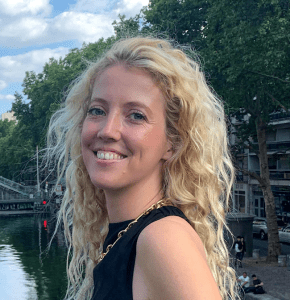
    Winnie Street
    Google

    Winnie Street is a Senior Researcher on the Google Paradigms of Intelligence Team and a fellow at the Institute of Philosophy at the University of London. Her research combines philosophical and empirical approaches to questions of AI cognition, consciousness and moral status, and their implications for AI ethics and safety. She previously worked as a software developer, and researched human-computer interaction problems at the intersection of privacy, trust and ambient computing. She is interested in the relationships between intelligence, sociality, and consciousness, and how they might be understood through comparative studies of artificial and natural systems.

    James Evans
    University of Chicago

    James Evans’ research focuses on the collective system of thinking and knowing, ranging from the distribution of attention and intuition, the origin of ideas and shared habits of reasoning to processes of agreement (and dispute), accumulation of certainty (and doubt), and the texture—novelty, ambiguity, topology—of understanding. He is especially interested in innovation—how new ideas and practices emerge—and the role that social and technical institutions (e.g., the Internet, markets, collaborations) play in collective cognition and discovery. Much of his work has focused on areas of modern science and technology, but he is also interested in other domains of knowledge—news, law, religion, gossip, hunches, machine and historical modes of thinking and knowing. He supports the creation of novel observatories for human understanding and action through crowd sourcing, information extraction from text and images, and the use of distributed sensors (e.g., RFID tags, cell phones). He uses machine learning, generative modeling, social and semantic network representations to explore knowledge processes, scale up interpretive and field-methods, and create alternatives to current discovery regimes. His research has been supported by the National Science Foundation, the National Institutes of Health, the Air Force office of Science Research, and many philanthropic sources, and has been published in Nature, Science, Proceedings of the National Academy of Science, American Journal of Sociology, American Sociological Review, Social Studies of Science, Research Policy, Critical Theory, Administrative Science Quarterly, and other outlets. His work has been featured in the Economist, Atlantic Monthly, Wired, NPR, BBC, El País, CNN, Le Monde, and many other outlets.

    At Chicago, he is Director of Knowledge Lab, which has collaborative, granting and employment opportunities, as well as ongoing seminars. He also founded and now directs the Computational Social Science program at Chicago, and sponsors an associated Computational Social Science workshop. He teaches courses in augmented intelligence, the history of modern science, science studies, computational content analysis, and Internet and Society. Before Chicago, he received his doctorate in sociology from Stanford University, served as a research associate in the Negotiation, Organizations, and Markets group at Harvard Business School, started a private high school focused on project-based arts education, and completed a B. A. in Anthropology at Brigham Young University.

    Andrew Lampinen
    Google DeepMind

    Andrew Lampinen is a Staff Research Scientist at DeepMind. He completed hisPhD in Cognitive Psychology at Stanford University. Prior to that, his background is in mathematics, physics, and machine learning.

    His research interests bridge cognitive science and artificial intelligence, often with a focus on how the complex behaviors and representations of models, agents, or humans emerge from their learning experiences or data. He has particular interests in language (especially explanations) as a learning signal, the structure of internal representations and how they can be used to study or improve a system, and the effects of environmental complexity on learning.

    Workshops

    Cognitive Basis of Reasoning (in Minds and AI)


    From January 27 to January 29, 2026. 9:30 AM to 5:00 PM
    Taylor Webb
    Dhanya Sridhar
    Details

    Mechanistic Basis of Reasoning (in Brains and AI)


    From February 24 to February 27, 2026. 9:00 AM to 5:00 PM
    Andrew Lampinen
    Guillaume Lajoie
    Details

    Social Reasoning and the Ecology of Thought


    From March 10 to March 13, 2026. 9:00 AM to 5:00 PM
    Winnie Street
    James Evans
    Details

    Registration

    Registration is required to attend the Thematic Semester activities in person and to access early recordings. Space is limited, so we advise you to register early.

    Please follow the link below to register for the Thematic Semester:

    Register Now

    Fees per workshop are as follows:

    Student: $40
    Post-Doc / Early Career Researcher: $70
    Researcher (Academic Institution): $120
    Researcher (Industry Research Lab) : $240

    The registration fee will be increased by 30% on site.
    Full payment is required upon registration for each workshop. Prices include taxes.

    Please note:

    1. The conferences will be in English
    2. IVADO regularly captures photos and videos of activities for use in videos, publications, and promotional materials.

    Logements

    To help you organise your trip, we have put together a list of hotels and residences that may be of interest to you.

    We also recommend that you visit https://www.mtl.org to find out about entertainment, events, accommodation and other useful information.

    Hotels and Residences

    Le Square Phillips Hôtel & Suites
    1193, Place Phillips
    Montréal, QC, H3B 3C9
    Phone: +1 866-393-1193
    info@squarephillips.com

    To benefit from IVADO’s preferential rates, please inform the hotelier when you make your reservation.

    Terrasse Royale
    5225, Côte-des-Neiges
    Montréal, QC, H3T 1Y1
    Phone: 514 739-6391
    info@terrasse-royale.com

    Residence Inn Marriott Montreal Midtown
    6785, boulevard Décarie
    Montréal, QC, H3W 3E3
    Phone: 514-303-8888 / 1-888-303-8881

    Courtyard Montreal Downtown
    380 boul. René-Lévesque Ouest,
    Montréal, QC, H2Z 0A6
    Phone: 1 514-398-9999 / 1 800 678-6323

    Residence Inn Montreal Downtown
    2045 rue Peel
    Montréal, QC, H3A 1T6
    Phone: 514 982-6064

    Château Versailles
    1659, rue Sherbrooke Ouest
    Montréal, QC, H3H 1E5
    Phone: 514 933-3611 / 1 888 933-8111
    info@versailleshotels.com

    La Maison McKenna
    5301, rue Mckenna
    Montréal, QC, H3T 1T9
    Phone: 514 738-2053
    info@maisonmckenna.ca

    Hôtel SENS
    1808, rue Sherbrooke Ouest
    Montréal, QC, H3H 1E5
    Phone: 514 933-8111 / 1 888 933-8111
    reservations@sensmtlversailles.com

    Hôtel Château de l’Argoat
    524, rue Sherbrooke Est
    Montréal, QC, H2L 1K1
    Phone: 514 842-2046
    chateauargoat@videotron.ca

    Le Nouvel Hôtel
    1740 boul. René-Lévesque Ouest
    Montréal, QC, H3H 1R3
    Phone: 514 931-8841 / 1 800 363-6063
    info@lenouvelhotel.com

    Other suggestions

    AIRBNB

    Homestay

    Tourisme Montréal

    Long Term Visitors

    Sari Kisilevsky
    Queens College CUNY

    Sari Kisilevsky is an Associate Professor of Philosophy at CUNY Queens College, where she specializes in ethics, philosophy of law, and political philosophy. She received my LLB and PhD from the University of Toronto, and her BA from McGill, where she first discovered philosophy. She was also a post-doctoral fellow at UCLA and a visiting professor at Princeton University, Hebrew University, and Tel Aviv University.

    Her research focuses on the nature of law, law’s moral significance, its role in shaping human society and our moral and political lives, and the nature of normativity or “bindingness” of rules that people give to themselves. She has written on issues of punishment, responsibility, legal judgment, rules and rule following (and application), and other related questions.

    She also works on Kant’s political philosophy, especially Kant’s Doctrine of Right, and on Just War Theory, with a special focus on the War on Terror.

    Her recent work brings together these lines of research and focuses on Kant’s doctrines of war and peace. This work raises questions of the distinctive role of law in peace, and the moral value of peace more generally.

    She also has recent work on responsibility and personhood, and the nature of instrumental value, and hard and easy cases. These projects (and more) are her focus while visiting Montréal for the 2025-26 academic year.
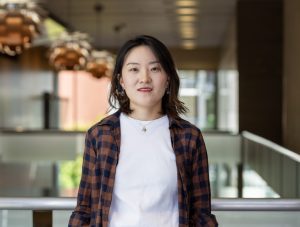
    Jieyu Zhao
    University of Southern California

    Jieyu Zhao is an Assistant Professor of Computer Science Department at University of Southern California. Prior to that, she was an NSF Computing Innovation Fellow at University of Maryland, College Park, working with Prof. Hal Daumé III. Jieyu received her Ph.D. from Computer Science Department, UCLA, where she was advised by Prof. Kai-Wei Chang. Her research interest lies in fairness of ML/NLP models. Her paper got the EMNLP Best Long Paper Award (2017). She was one of the recipients of 2020 Microsoft PhD Fellowship and has been selected to participate in 2021 Rising Stars in EECS workshop. Her research has been covered by news media such as Wired, The Daily Mail and so on. She was invited by UN-WOMEN Beijing on a panel discussion about gender equality and social responsibility.

    F.A.Q.

    Your most frequently asked questions, answered.

    Show more

    Newsletter

    Our latest opportunities, and occasionaly some other communications, in your inbox, once a month!

    Subscribe

    Logo's site
    • About us
    • Events
    • Training
    • Research
    • Opportunities
    • Tools
    • Community
    • Contact us
    • Fr
    • News and resources
    • Fr
    Logo
    Logo
    Logo
    Logo
    Logo
    Logo
    Logo
    Logo
    Logo
    Logo

    Privacy policy: we follow the Université de Montréal guidelines.

    Cookie Settings

    © 2026 IVADO

    IVADO respects your privacy

    The use of cookies allows us to improve and personalize your web experience. Some cookies are mandatory to ensure the operation and security of the Web site, while others record your preferences. For more information, please consult Université de Montréal's privacy policy and terms of use.

    Required cookies Always active
    These cookies are essential for the proper functioning and security of our websites and online services. They cannot be deactivated. Among other things, they enable us to secure your connection by collecting your identification information, know the type and model of your device, browser, etc., and store your preferences.
    Preferences
    The technical storage or access is necessary for the legitimate purpose of storing preferences that are not requested by the subscriber or user.
    Analytics cookies
    These cookies are used to analyze navigation on our site (origin of visitors, frequency of visits, pages visited more or less frequently, etc.) in order to improve its operation and offer visitors a better user experience. All information collected by these cookies is aggregated and therefore anonymized. The technical storage or access that is used exclusively for anonymous statistical purposes. Without a subpoena, voluntary compliance on the part of your Internet Service Provider, or additional records from a third party, information stored or retrieved for this purpose alone cannot usually be used to identify you.
    Advertising cookies
    These cookies can be activated on our website to build up profiles of your interests. They help us to offer you personalized advertising and content. If you deactivate these cookies, you will be offered advertising and content that is less targeted to your interests.
    • Manage options
    • Manage services
    • Manage {vendor_count} vendors
    • Read more about these purposes
    View your preferences
    • {title}
    • {title}
    • {title}